


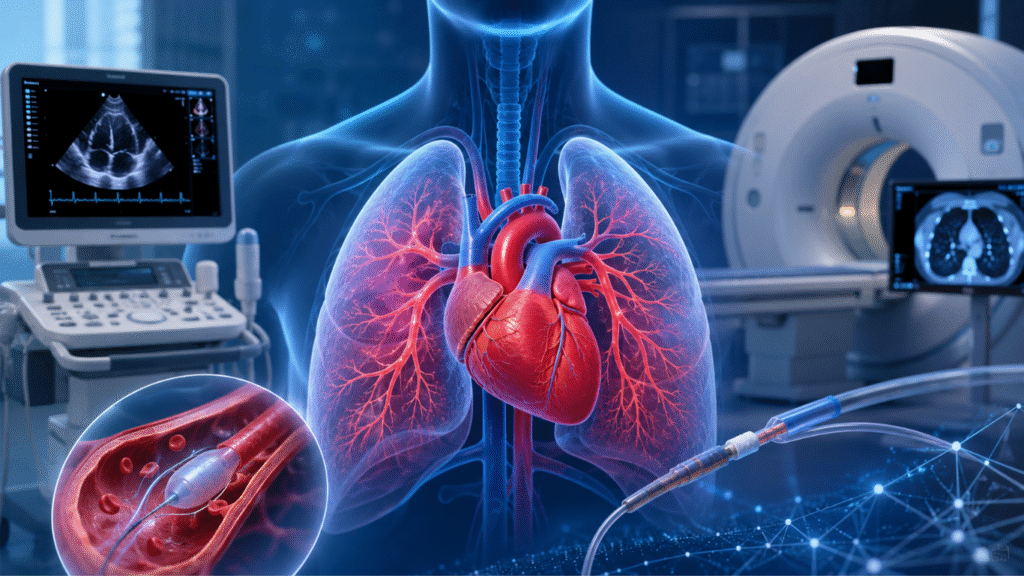
Advanced Diagnosis of Pulmonary Hypertension: Modern Tests for Early Detection
Pulmonary Hypertension (PH) is a serious heart and lung condition that often develops silently, making early diagnosis essential for effective treatment. This condition causes high blood pressure in the arteries of the lungs, forcing the heart to work harder and potentially leading to severe complications if left untreated. At Innocent Hearts Super Speciality Hospital, Dr. Vivek Rana, a leading Cardiologist in Jalandhar, emphasizes the importance of advanced diagnostic technologies for identifying pulmonary hypertension at the earliest stage. Understanding Pulmonary Hypertension Pulmonary hypertension is difficult to diagnose early because its symptoms—such as shortness of breath, fatigue, chest pain, dizziness, and swelling—can often resemble other heart or lung conditions. Many patients may not realize they have PH until the disease has progressed. That’s why modern medical evaluation and advanced testing play a crucial role in confirming the condition and identifying its underlying cause. Why Early Detection of Pulmonary Hypertension Matters Early diagnosis allows doctors to start treatment sooner, potentially slowing disease progression and improving quality of life. Dr. Vivek Rana at Innocent Hearts Super Speciality Hospital focuses on a detailed and technology-driven approach to detect PH accurately, assess heart and lung function, and guide personalized treatment plans. Advanced Diagnostic Tests for Pulmonary Hypertension 1. Blood Tests Blood tests are often the first step in evaluating pulmonary hypertension. These tests help identify possible causes of PH or detect complications related to heart and lung function. They may also reveal associated medical conditions or genetic factors. 2. Chest X-Ray A chest X-ray provides images of the heart, lungs, and chest structure. It can reveal enlargement of the right ventricle or pulmonary arteries, which may suggest pulmonary hypertension. This test also helps identify other lung diseases contributing to symptoms. 3. Electrocardiogram (ECG) An ECG is a non-invasive test that records the heart’s electrical activity. It helps doctors identify irregular heart rhythms and signs of right-sided heart enlargement or strain, which are often associated with PH. 4. Echocardiogram An echocardiogram uses sound waves to create moving images of the heart. This important screening tool allows doctors to evaluate heart chamber size, heart valve function, and blood flow through pulmonary arteries. It is one of the most commonly used tests for initial PH assessment. 5. Exercise Stress Test Exercise testing on a treadmill or stationary bike measures how well the heart functions during physical activity. It helps assess symptom severity and exercise tolerance, which can provide important clues about pulmonary hypertension progression. 6. Right Heart Catheterization Right heart catheterization is considered the gold standard for confirming pulmonary hypertension. During this procedure, a flexible catheter is inserted into a blood vessel and guided into the right side of the heart and pulmonary artery. This allows direct measurement of pulmonary artery pressure and helps determine the severity of PH. Advanced Imaging for Better Accuracy CT Scan (Computed Tomography) A CT scan creates detailed cross-sectional images of the chest, lungs, and blood vessels. It can identify blood clots, enlarged pulmonary arteries, and structural abnormalities that may contribute to pulmonary hypertension. Pulmonary Angiography This specialized imaging test uses contrast dye and X-rays to examine blood flow in lung arteries. It is particularly useful for detecting blockages or chronic blood clots. MRI (Magnetic Resonance Imaging) MRI provides detailed images of heart structure and function. It helps doctors assess the right ventricle’s performance and evaluate blood flow patterns without radiation exposure. Lung Function and Sleep Assessments Pulmonary Function Tests These tests measure lung capacity and airflow to detect underlying respiratory disorders that may lead to pulmonary hypertension, such as COPD or pulmonary fibrosis. Sleep Study Sleep apnea can contribute to pulmonary hypertension. A sleep study monitors oxygen levels, breathing patterns, and heart rate during sleep to detect obstructive sleep apnea or related breathing disorders. Ventilation/Perfusion (V/Q) Scan A V/Q scan checks air and blood flow in the lungs, helping doctors identify blood clots or circulation problems affecting lung function. Genetic Testing and Family Screening For patients with a family history of pulmonary hypertension, genetic testing may be recommended. Identifying inherited risk factors can support earlier diagnosis and preventive care for family members. Expert Pulmonary Hypertension Care in Jalandhar At Innocent Hearts Super Speciality Hospital, Dr. Vivek Rana combines advanced technology with expert cardiac care to diagnose pulmonary hypertension accurately and efficiently. His comprehensive approach ensures that every patient receives a thorough evaluation using modern diagnostic tools tailored to their symptoms and risk factors. When Should You See a Cardiologist? If you experience persistent shortness of breath, chest discomfort, dizziness, or unexplained fatigue, it is important to seek medical evaluation. Early consultation with an experienced cardiologist can make a significant difference in detecting pulmonary hypertension before it becomes severe. Frequently Asked Questions (FAQs) What are the early symptoms of pulmonary hypertension? Early symptoms of pulmonary hypertension often include shortness of breath, fatigue, chest pain, dizziness, rapid heartbeat, and swelling in the ankles or legs. Since these symptoms can mimic other heart or lung conditions, early medical evaluation is important. Which test is most accurate for diagnosing pulmonary hypertension? Right heart catheterization is considered the gold standard for confirming pulmonary hypertension because it directly measures blood pressure in the pulmonary arteries and evaluates heart function accurately. Can pulmonary hypertension be detected through an echocardiogram? Yes, an echocardiogram is commonly used as an initial screening test for pulmonary hypertension. It helps assess heart structure, valve function, and pressure changes, though additional tests may be needed for confirmation. Why is early diagnosis of pulmonary hypertension important? Early diagnosis allows timely treatment, helps slow disease progression, improves quality of life, and reduces the risk of severe complications such as heart failure. Where can I get advanced pulmonary hypertension diagnosis in Jalandhar? Patients can consult Dr. Vivek Rana, Cardiologist in Jalandhar, at Innocent Hearts Super Speciality Hospital for advanced pulmonary hypertension diagnosis using modern cardiac imaging, lung assessments, and specialized heart testing. Conclusion Pulmonary hypertension is a potentially life-threatening condition, but advancements in medical technology have made early and accurate diagnosis more possible than ever. Through blood