


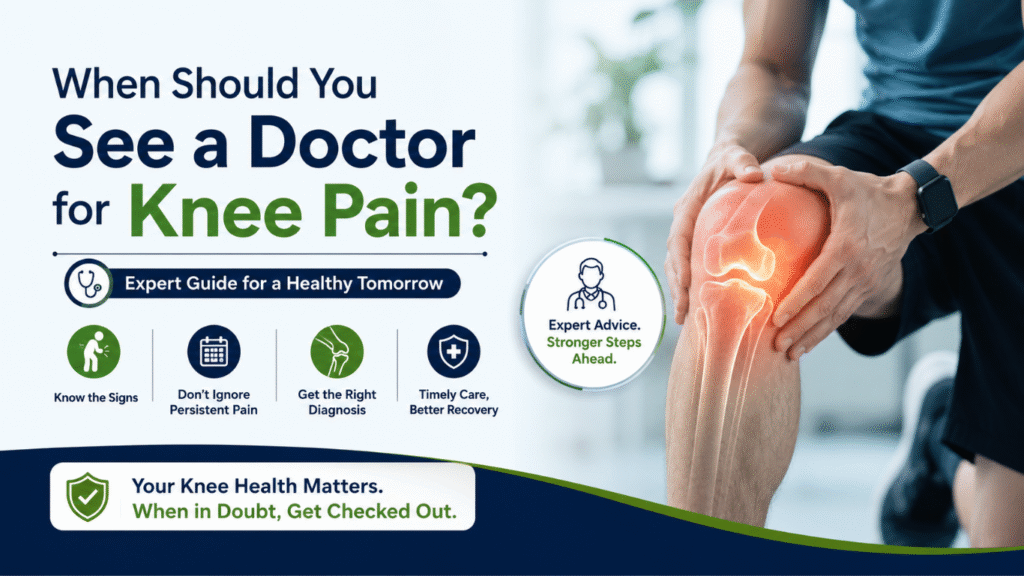
Knee pain is one of the most common musculoskeletal complaints affecting people of all ages. Whether it develops gradually due to wear and tear or occurs suddenly after an injury, knee pain can interfere with walking, climbing stairs, exercising, and even routine daily activities.
Many people ignore discomfort and hope it will go away on its own. While minor aches may improve with rest, some symptoms indicate an underlying condition that requires medical attention. Knowing when to see a doctor for knee pain can help prevent complications and improve treatment outcomes.
At Innocent Hearts Superspeciality Hospital, our orthopedic specialists regularly treat patients suffering from knee injuries, arthritis, ligament damage, cartilage problems, and chronic joint pain. Early diagnosis often leads to faster recovery and better long-term joint health.
What Is Knee Pain?
Knee pain refers to discomfort, soreness, stiffness, or swelling occurring in or around the knee joint. It may result from injuries, arthritis, overuse, ligament tears, cartilage damage, tendon inflammation, infections, or underlying medical conditions.
The knee is one of the body’s largest and most complex joints. It supports body weight while allowing movement during walking, running, jumping, and climbing stairs. Because of its constant use, the knee is particularly vulnerable to injury and degeneration.
Common Causes of Knee Pain in Adults
Several conditions can lead to knee pain, including:
1. Osteoarthritis
The most common cause of chronic knee pain in older adults. It occurs when cartilage gradually wears away, causing pain, stiffness, and reduced mobility.
2. Ligament Injuries
Sports injuries and accidents can damage the ACL, PCL, MCL, or LCL ligaments, leading to pain, instability, and swelling.
3. Meniscus Tears
The meniscus acts as a cushion between the bones. Twisting movements or sudden impacts may cause tears that result in pain and locking of the knee.
4. Tendinitis
Inflammation of the tendons around the knee often develops due to repetitive activities such as running or jumping.
5. Bursitis
Inflammation of fluid-filled sacs around the knee can cause swelling and discomfort.
6. Rheumatoid Arthritis
An autoimmune condition that causes inflammation and joint damage.
7. Patellofemoral Pain Syndrome
Often called runner’s knee, this condition causes pain around the kneecap during movement.
8. Fractures
Trauma or falls may result in fractures around the knee that require immediate medical care.
What Causes Knee Pain When Walking?
Pain while walking may result from:
• Osteoarthritis
• Meniscus injuries
• Ligament damage
• Tendinitis
• Knee misalignment
• Cartilage wear
• Patellofemoral syndrome
Pain that interferes with walking should never be ignored, especially if it continues to worsen over time.
Symptoms That Should Not Be Ignored
While occasional discomfort may not be serious, certain symptoms require prompt evaluation.
Seek medical attention if you experience:
• Persistent pain lasting more than one week
• Significant swelling
• Difficulty walking
• Reduced range of motion
• Knee locking or catching
• Instability or buckling
• Redness and warmth around the joint
• Fever along with knee pain
• Pain following an injury
• Sudden inability to bear weight
When to Worry About Knee Pain
Many patients ask, “When should I worry about knee pain?”
You should be concerned if:
- Pain disrupts your daily activities.
- Swelling develops rapidly.
- The knee feels unstable.
- Symptoms continue despite rest.
- You hear a popping sound during injury.
- The knee becomes visibly deformed.
- Fever accompanies joint pain.
- Walking becomes difficult.
These signs may indicate ligament injuries, fractures, severe arthritis, infections, or cartilage damage requiring professional treatment.
When Should You See an Orthopedic Doctor for Knee Pain?
Consult an orthopedic specialist if:
• Pain lasts longer than a few days.
• Home treatments fail to provide relief.
• Swelling repeatedly returns.
• Mobility is becoming limited.
• Knee pain affects work or exercise.
• Previous injuries continue causing symptoms.
• You suspect arthritis or joint degeneration.
An orthopedic doctor in Jalandhar can evaluate the condition using physical examination, imaging studies, and diagnostic tests to identify the root cause.
How Is Knee Pain Diagnosed?
Diagnosis may include:
Physical Examination
Assessment of joint stability, swelling, tenderness, and range of motion.
X-Rays
Helpful for identifying arthritis, fractures, and alignment issues.
MRI Scan
Provides detailed images of ligaments, cartilage, tendons, and soft tissues.
Blood Tests
May be recommended if inflammatory arthritis or infection is suspected.
Knee Pain Treatment Options
Treatment depends on the underlying cause.
Non-Surgical Treatments
• Rest and activity modification
• Physiotherapy
• Anti-inflammatory medications
• Knee braces
• Weight management
• Joint injections
Surgical Treatments
• Arthroscopic surgery
• Ligament reconstruction
• Meniscus repair
• Partial knee replacement
• Total knee replacement
The treatment plan is tailored according to the patient’s age, activity level, and severity of the condition.
Benefits of Early Treatment
Early intervention can:
• Prevent joint deterioration
• Reduce pain faster
• Improve mobility
• Avoid complications
• Delay or prevent surgery
• Enhance quality of life
Why Choose Innocent Hearts Superspeciality Hospital for Knee Pain Treatment in Jalandhar?
Patients seeking knee pain treatment in Jalandhar benefit from:
• Experienced orthopedic specialists
• Advanced diagnostic facilities
• Comprehensive rehabilitation services
• Personalized treatment plans
• Modern surgical techniques
• Patient-centered care
Whether you need conservative management or advanced orthopedic intervention, our team is committed to helping you return to an active and pain-free life.
Frequently Asked Questions
An orthopedic doctor specializes in diagnosing and treating knee pain, joint disorders, injuries, and arthritis.
If pain lasts longer than a few days, worsens, or affects daily activities, you should seek medical advice.
Common causes include arthritis, ligament injuries, meniscus tears, tendon problems, and cartilage damage.
Minor strains may improve with rest, but persistent or severe pain requires professional evaluation.
Look for an experienced orthopedic specialist with expertise in diagnosing and treating both non-surgical and surgical knee conditions.
No. Knee pain can result from injuries, tendon problems, infections, bursitis, or other medical conditions.
Conclusion
Understanding when should you see a doctor for knee pain is essential for protecting your long-term joint health. While some cases improve with rest, persistent pain, swelling, instability, or difficulty walking may indicate an underlying condition requiring professional care.
If you are experiencing ongoing knee discomfort, schedule a consultation with the orthopedic team at Innocent Hearts Superspeciality Hospital for expert evaluation and personalized treatment.